Explore
Best for
14 results
Ancient sites · Skala Eresou (west Lesbos)
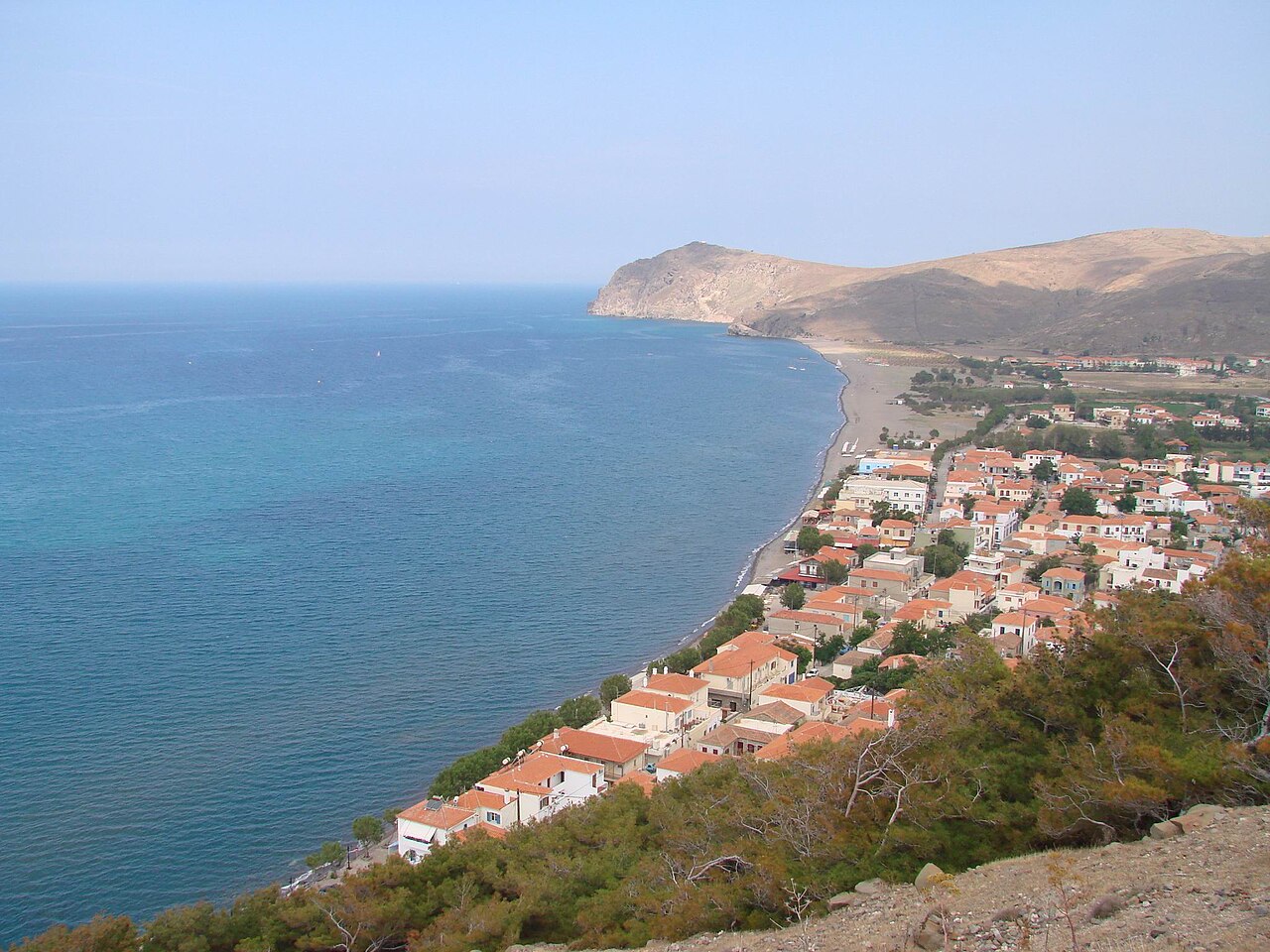
Acropolis of Eresos (Vigla Hill)
The naturally fortified hill above the south-east side of Skala Eresou, called Mastos in antiquity and Vigla today, which carried the acropolis of ancient Eresos. Sections of the ancient circuit wall survive near the foot of the hill, together with the ruins of one round and one later rectangular tower and a cistern from the 14th-century Genoese castle that stood here until the Ottoman conquest of 1462.
Ancient sites · Antissa / Gavathas (west Lesbos)
Ancient Antissa and Ovriokastro
The site of one of the ancient Aeolian cities of Lesbos, on a headland on the north-west coast near Gavathas, first settled in the Late Bronze Age. Tall walls reinforced by square towers survive along the coastal side, and a Byzantine castle known as Ovriokastro or Agioi Theodoroi, historically the island's third strongest fortress after Mytilene and Molyvos, was built over the ancient city.
Ancient sites · Molyvos / Mithymna (north Lesbos)
Ancient Mithymna
The remains of the Aeolian city that occupied the same headland as modern Molyvos, at its largest in the Archaic period and contracted to the acropolis and the Dapia area by the 4th century BC. Scattered visible remains include Hellenistic defensive walls later absorbed into the medieval castle, dock ruins in the modern harbour, a bath complex used from the 3rd century BC to the 3rd century AD, Roman aqueduct fragments from Mount Lepetymnos, and Archaic and Hellenistic-Roman cemeteries along the road to Petra.
Ancient sites · Mytilene
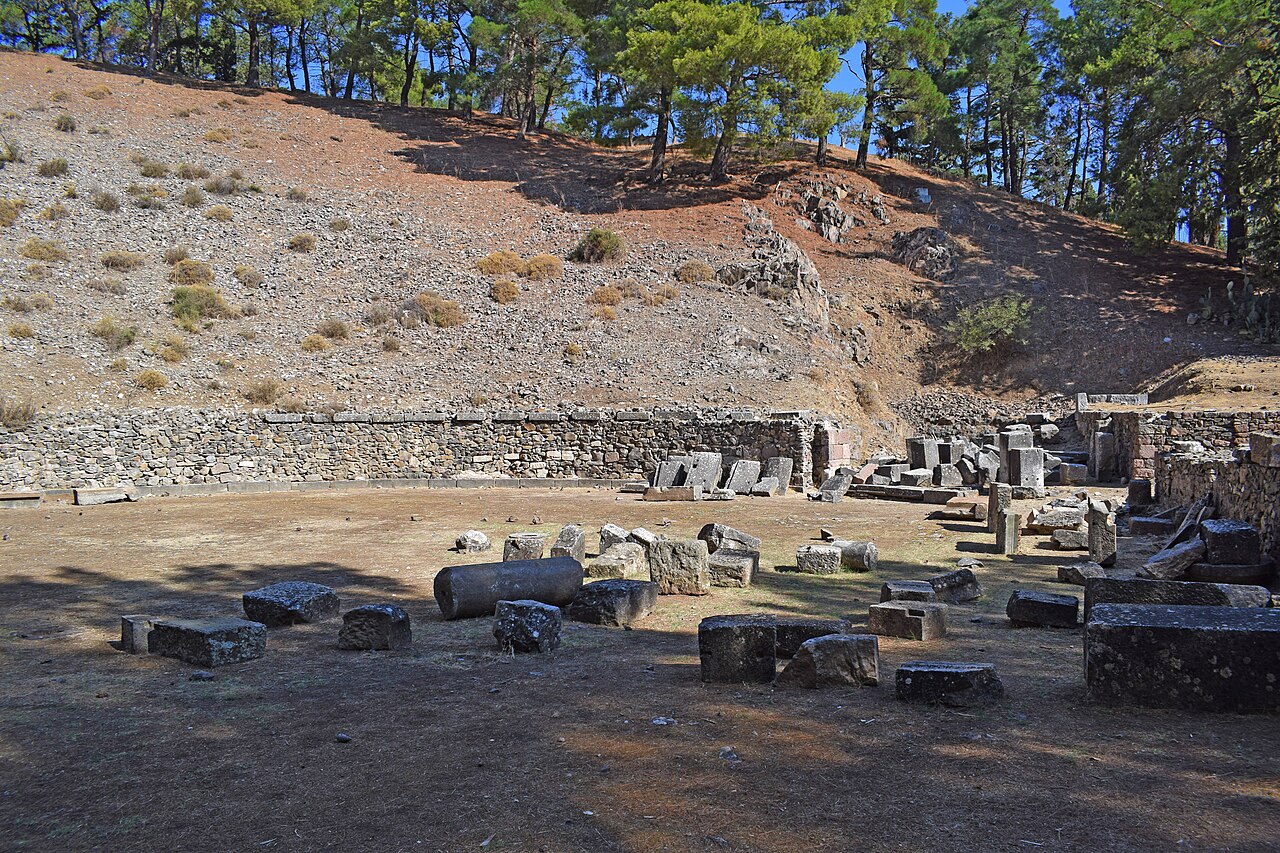
Ancient Theatre of Mytilene
A large Hellenistic theatre cut into the volcanic rock of Agia Kyriaki hill above Mytilene, about 107 m in diameter, with a marble-clad orchestra wall and a reported capacity of around 10,000. Ancient tradition holds that Pompey used it as the model for Rome's first stone theatre; part of the building was converted into an arena in the Roman period.
Ancient sites · Agia Paraskevi (central Lesbos)
Early Christian Basilica of Halinadou
A three-aisled, timber-roofed Early Christian basilica with narthex and semicircular apse, dated to the second half of the 6th century by its architecture and by a coin of 587/8 AD found in the excavation. It was dug in 1937 and partly restored by Professor Anastasios Orlandos, who re-erected the Ionic colonnades; parts of the presbytery screen and the altar area survive.
Ancient sites · Agia Paraskevi (central Lesbos)
Sanctuary of Apollo Napaios at Klopedi
An Archaic sanctuary above Agia Paraskevi whose scattered trachyte architectural fragments include some of the finest known Aeolic capitals. The temple was founded in the 8th century BC on a cult site going back to the Late Bronze Age, and worship shifted from a fertility goddess to Apollo Napaios in the 7th century BC.
Ancient sites · Molyvos / Mithymna (north Lesbos)
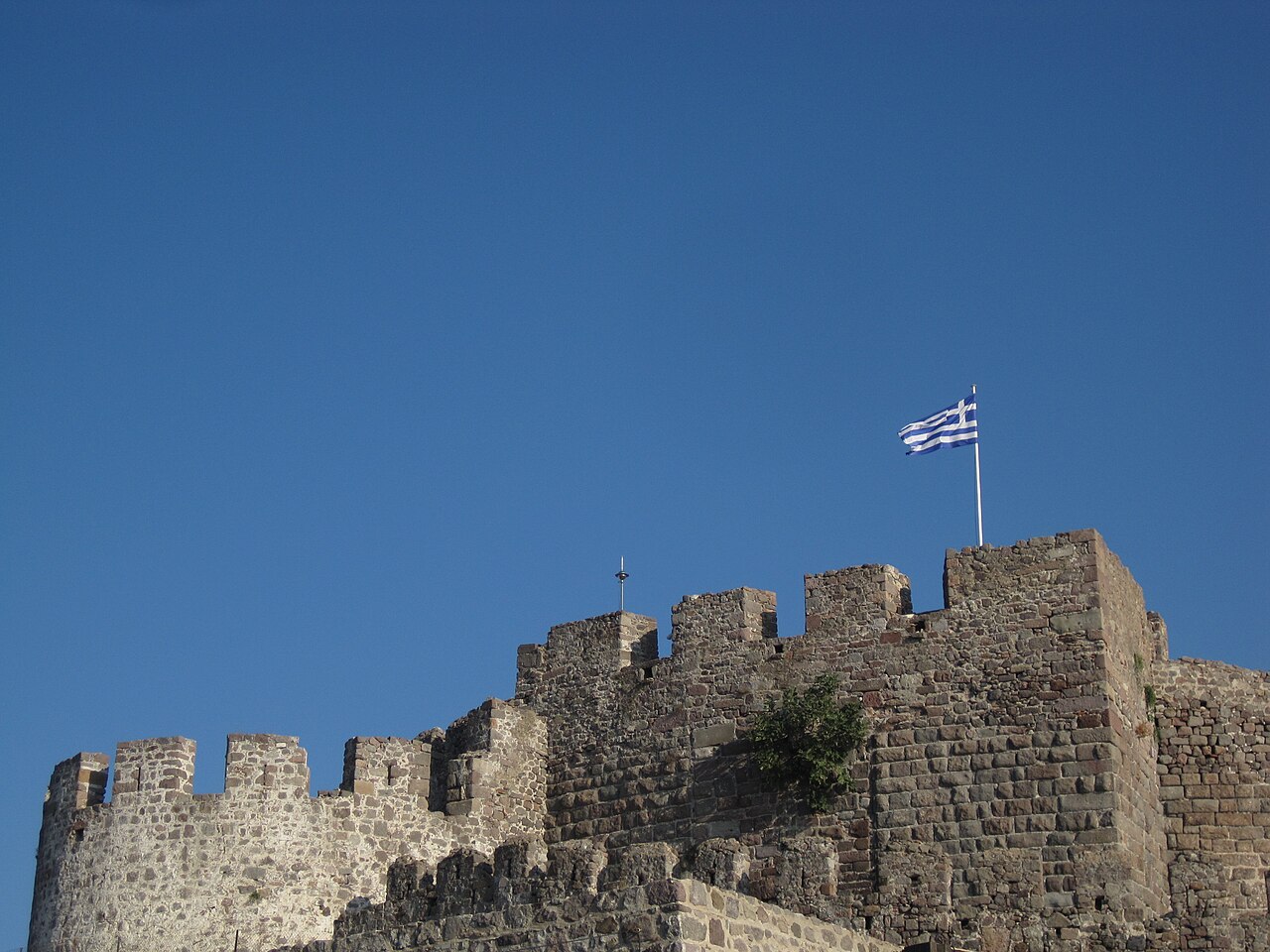
Castle of Mithymna (Molyvos Castle)
The island's second largest fortress, a trapezoid of roughly 70 m per side reinforced by ten square and round towers and entered through three successive gates. Built of local reddish-brown stone with Byzantine, Gattilusi and Ottoman phases; it retains an acropolis tower with battlements, a vaulted magazine and Byzantine cistern remains, and is used for summer cultural events.
Ancient sites · Mytilene
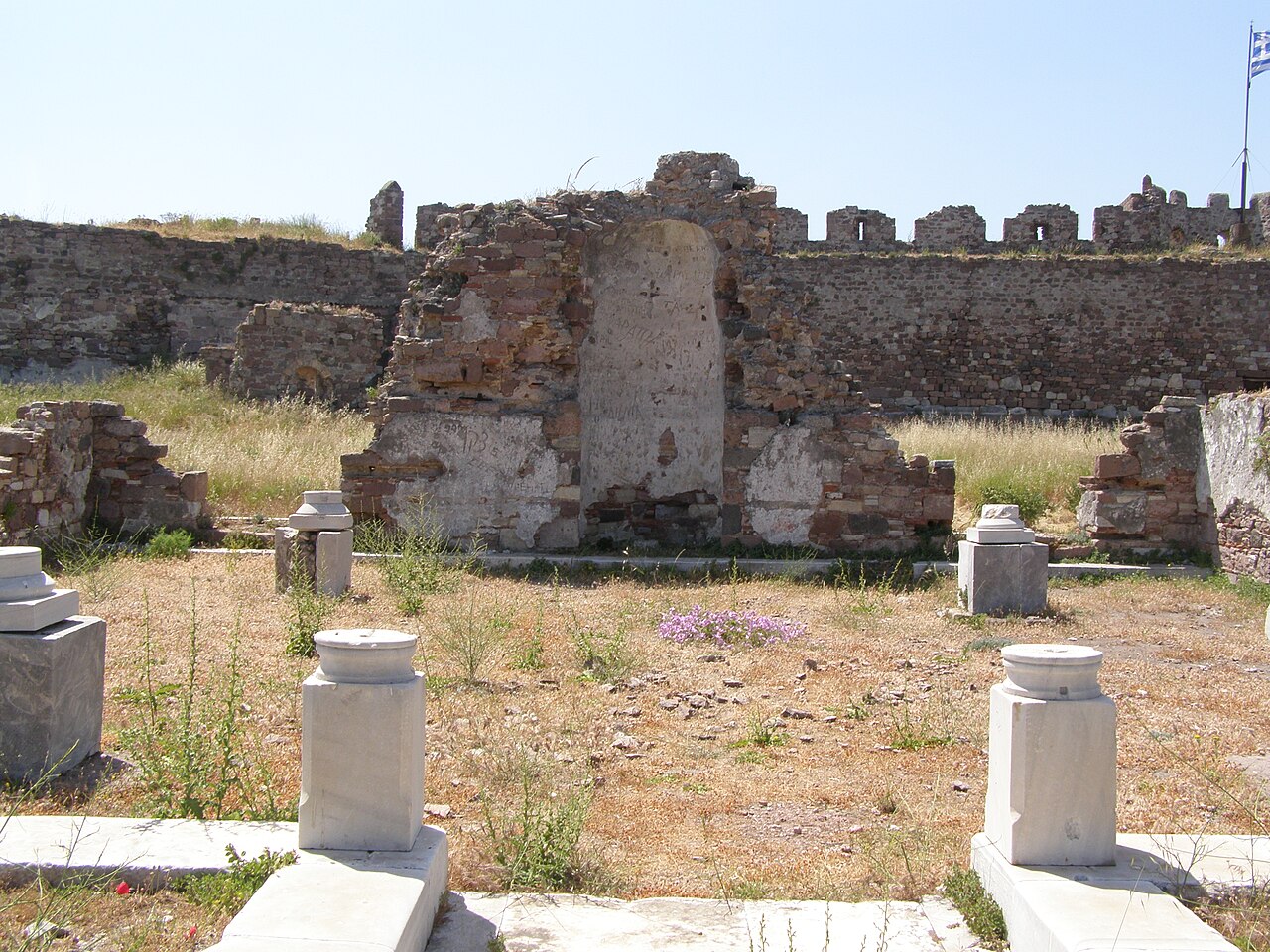
Castle of Mytilene
One of the largest fortresses in the Mediterranean, occupying the ancient acropolis peninsula on the north-east edge of the modern town and divided into Upper, Middle and Lower Castle. First built in the 6th century under Justinian I, drastically rebuilt by the Genoese Gattilusi (1355-1462) and then altered by the Ottomans, who added round towers, mosques, a hammam and a residential quarter.
Ancient sites · Between Sigri and Antissa (west Lesbos)
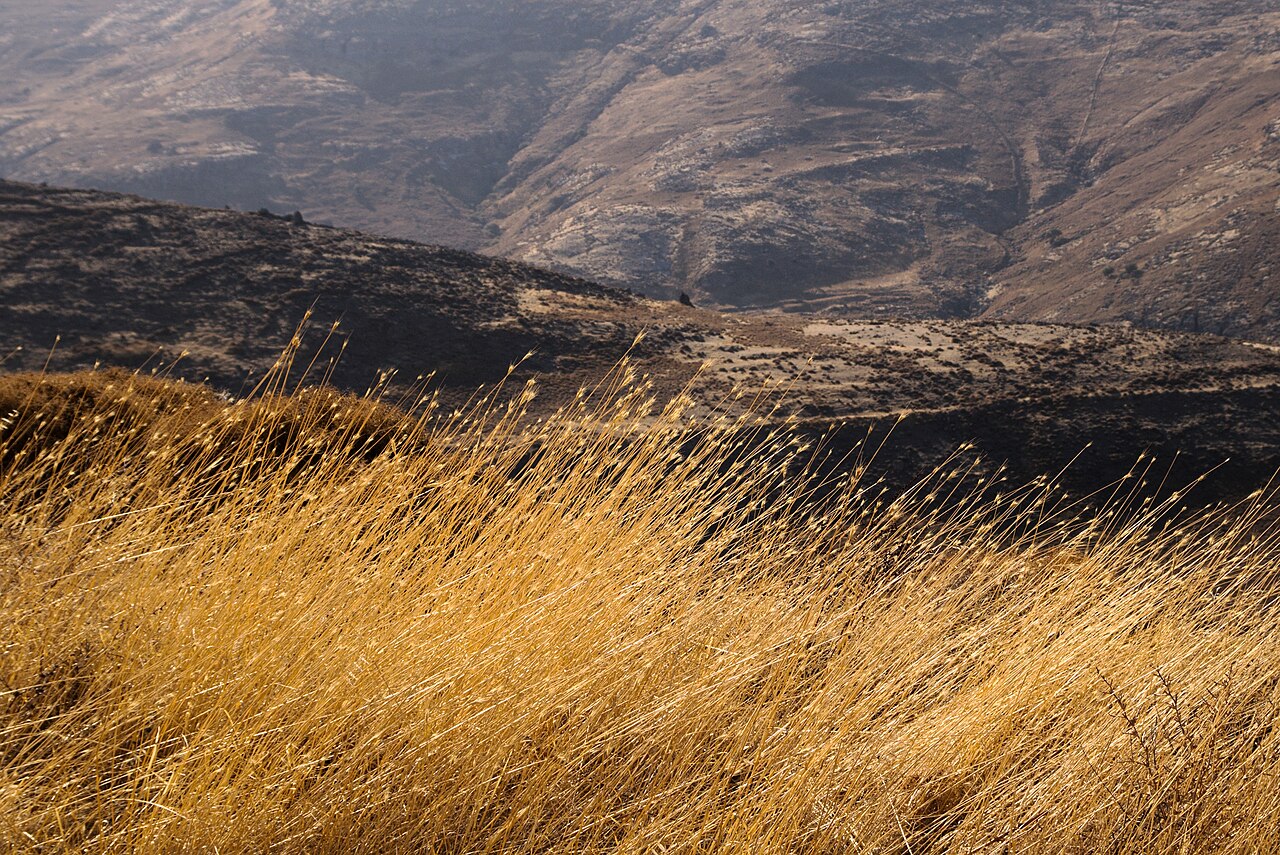
Petrified Forest of Lesvos - Bali Alonia Park
A fenced park on the Sigri-Antissa road holding upright petrified trunks, root systems, conifers and angiosperms preserved where they grew, part of the Lesvos Petrified Forest created by volcanic eruptions and ash falls 17-20 million years ago. The forest was declared a Protected Natural Monument of Greece in 1985 and is the core of the Lesvos Island UNESCO Global Geopark; the park has marked walking paths, rest points and viewpoints and is open daily 08:00-16:00.
Ancient sites · Moria (east Lesbos)
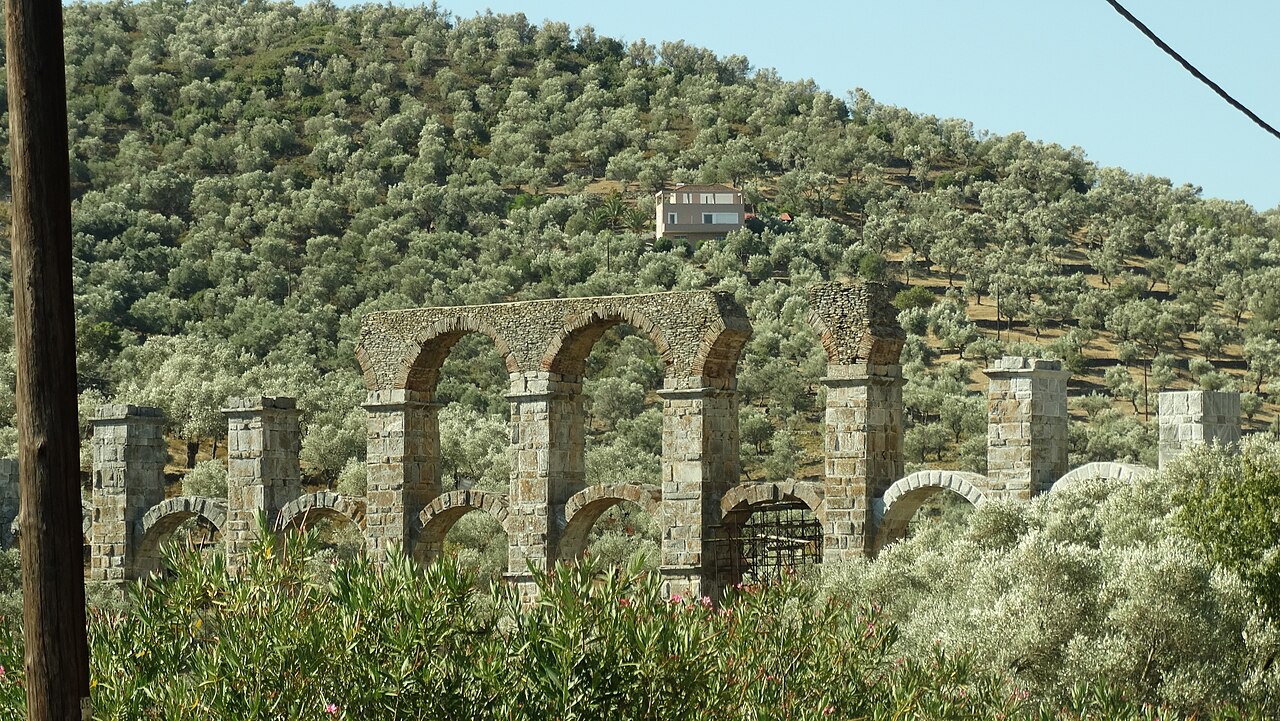
Roman Aqueduct of Moria
The best preserved surviving stretch of the Roman aqueduct that carried water 26 km from the springs of Mount Olympos to ancient Mytilene, probably built in the late 2nd or early 3rd century AD. The marble and stone water bridge is about 117 m long and 24.5 m high, with 16 pillars and 17 arched openings arranged in three tiers.
Ancient sites · Gulf of Kalloni (central Lesbos)
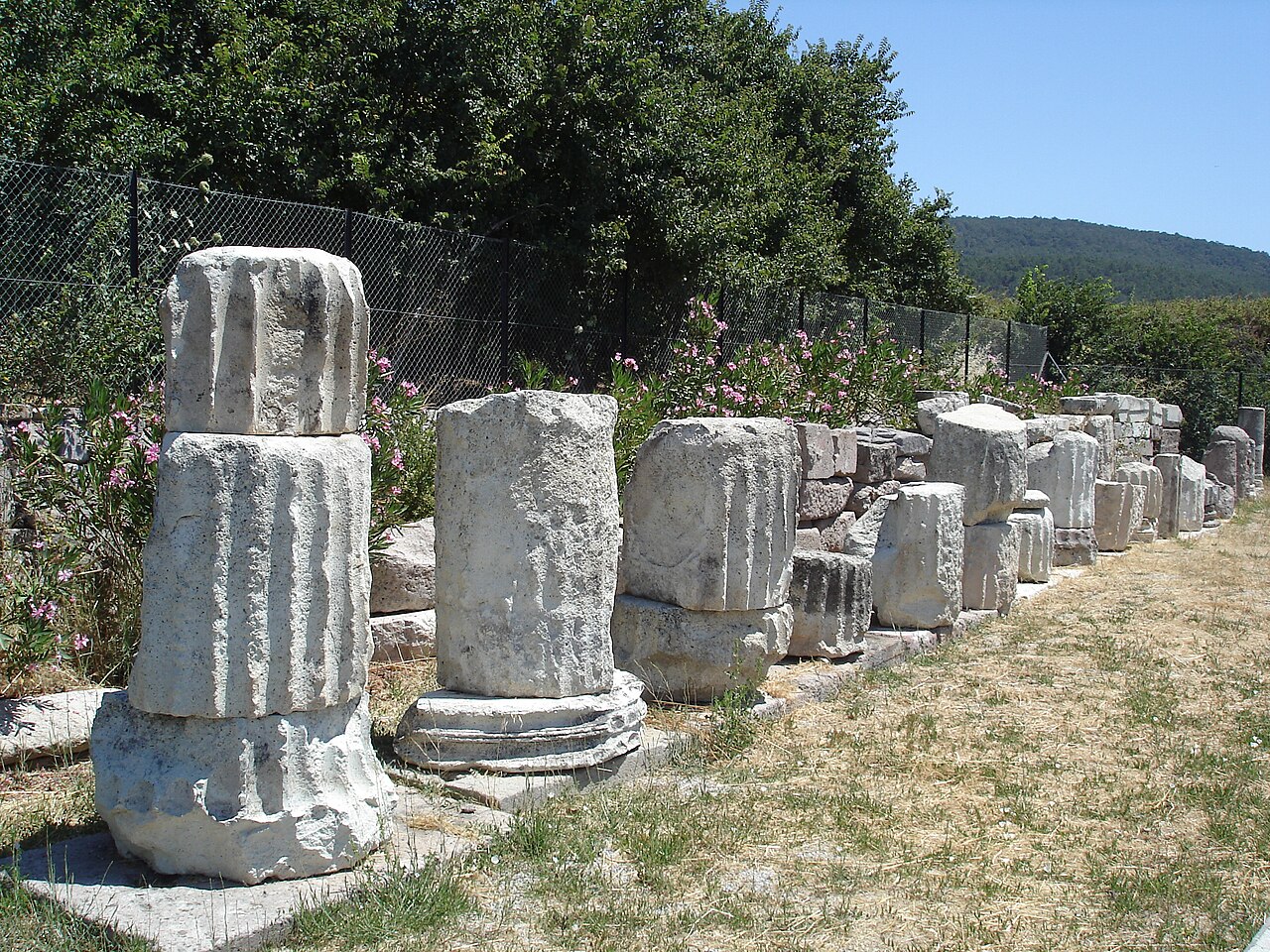
Sanctuary and Temple at Mesa
A monumental Ionic pseudo-peripteral temple of about 330-300 BC measuring 41.55 x 23.78 m with 8 x 14 columns, standing in the plain at the head of the Gulf of Kalloni. It was the common sanctuary of the Lesbians, probably dedicated to the Lesbian triad of Zeus, Hera and Dionysos, and was destroyed by an earthquake in the 3rd century AD.
Ancient sites · Sigri
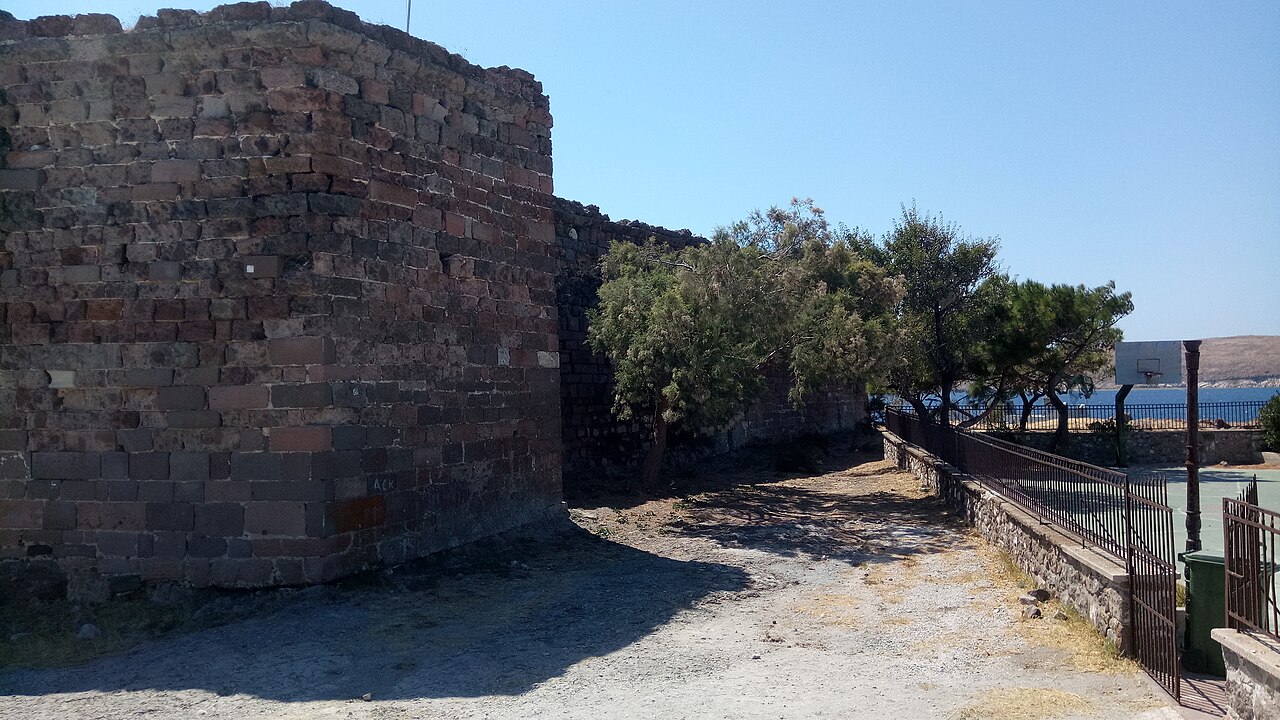
Castle of Sigri
A square Ottoman fort with four corner towers, bastions and a cannon platform, built in 1757 by the Ottoman admiral Suleyman Pasha to protect shipping and the westernmost anchorage of Lesbos from pirates. It is built of brown-red trachyte, has a gate with an Arabic-style arch, was damaged by the 1889 earthquake and is currently under restoration by the Archaeological Service and not yet open to the public.
Ancient sites · Loutropoli Thermis (east Lesbos)
Prehistoric Settlement of Thermi
A Bronze Age town on the shore at Pyrgoi Thermis, about 10 km north of Mytilene, with five successive Early Bronze Age phases dated 3200-2400 BC and later occupation to around 1300 BC. It was excavated between 1929 and 1933 by Winifred Lamb for the British School at Athens; visible remains include radial and block-planned housing, streets, fortification walls and bastions.
Ancient sites · Petra (north Lesbos)
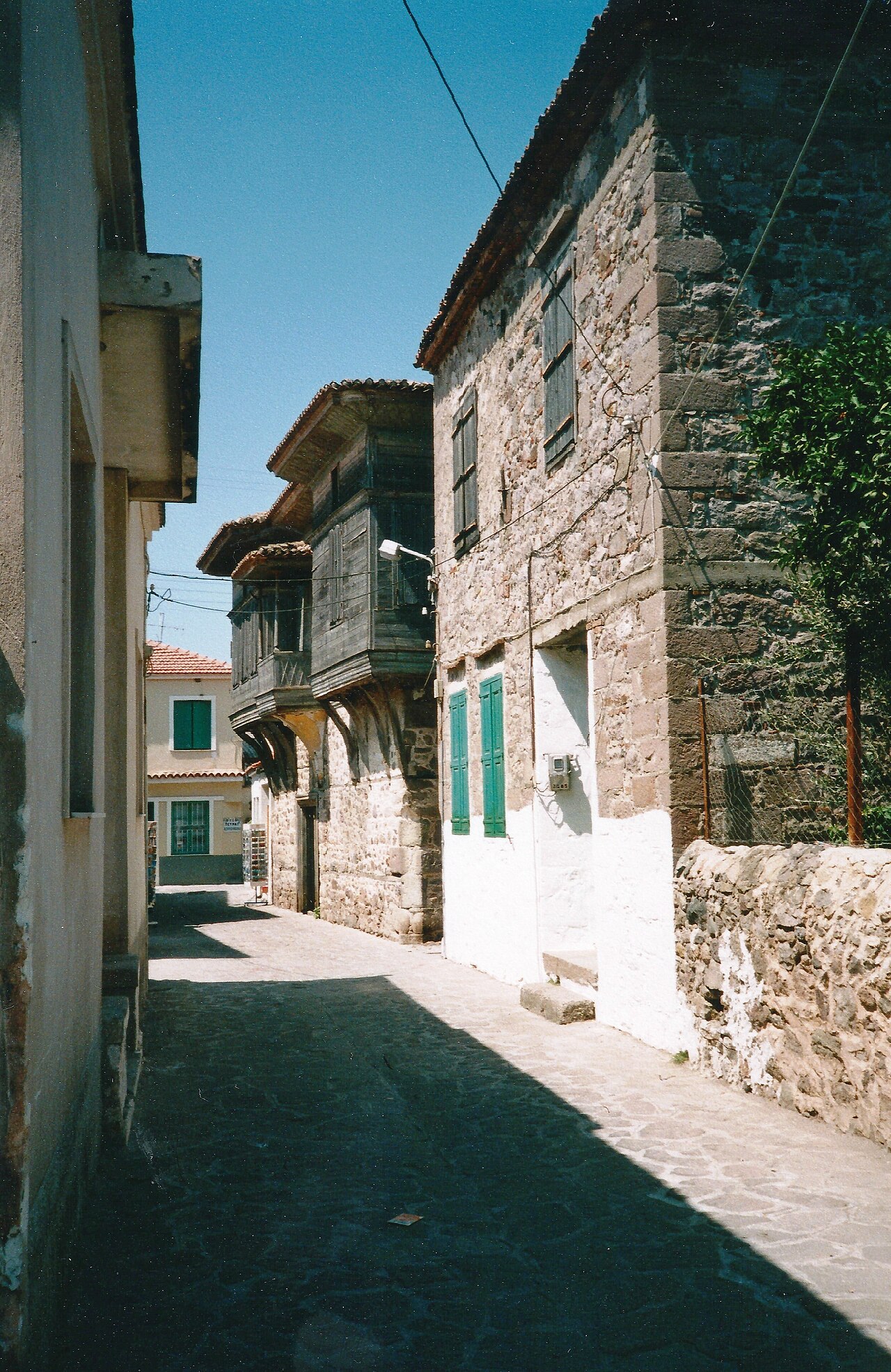
Vareltzidaina Mansion
A late 18th or early 19th century merchant's house in Petra, used as both a residence and a wine-trading base by the Bardakcoglu family and one of the best surviving examples of secular architecture from late Ottoman Lesbos. The fortress-like stone ground floor was for storage, while the lighter timber-framed upper floor has rooms around a central sofa with carved woodwork, ceiling rosettes and painted landscape murals; it was fully restored in 1999-2000 and is administered by the Ministry of Culture.