Explore
Best for
14 results
Churches & monasteries · Anemotia (central-west Lesbos)
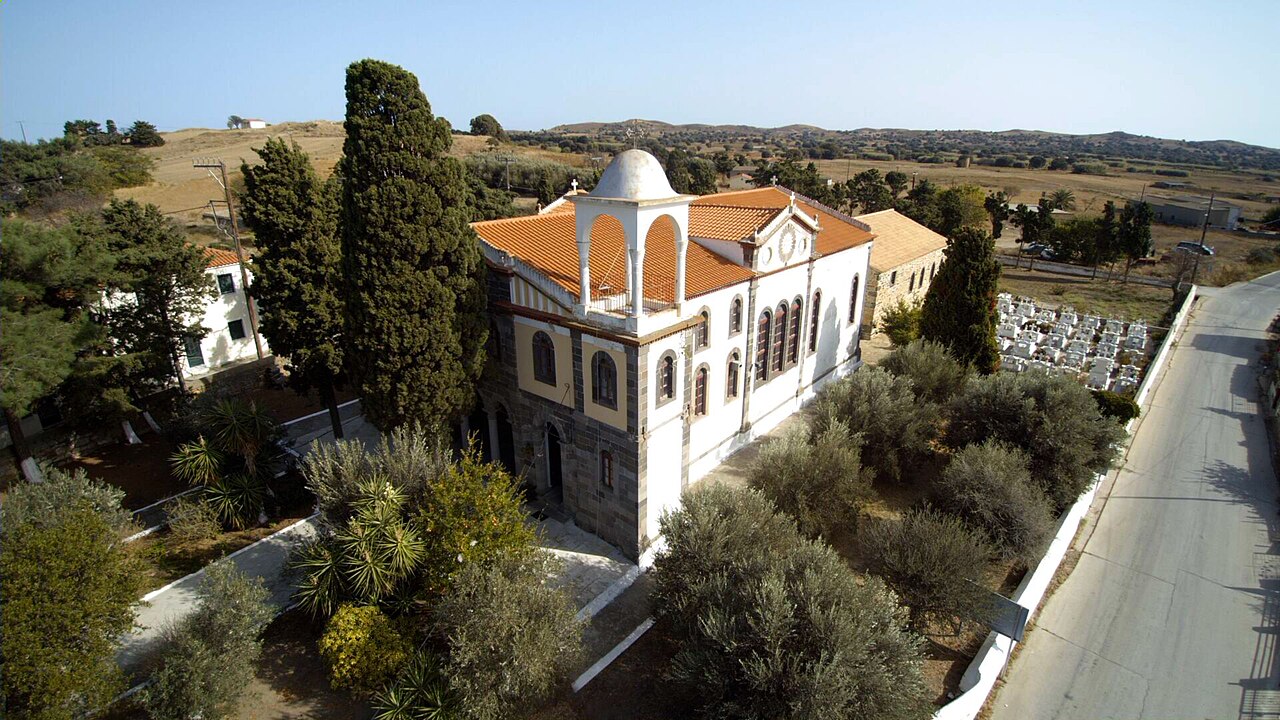
Church of Agios Georgios, Anemotia
A single-space village church with a gabled tile roof in the lower part of Anemotia, built in 1702 according to its founder's inscription and enclosed by a wall with a gate on the south side. Its painted decoration is unusual for an Orthodox church, showing the martyrdom cycle of Saint George and scenes from the Book of Revelation rather than the standard iconographic programme.
Churches & monasteries · Mytilene
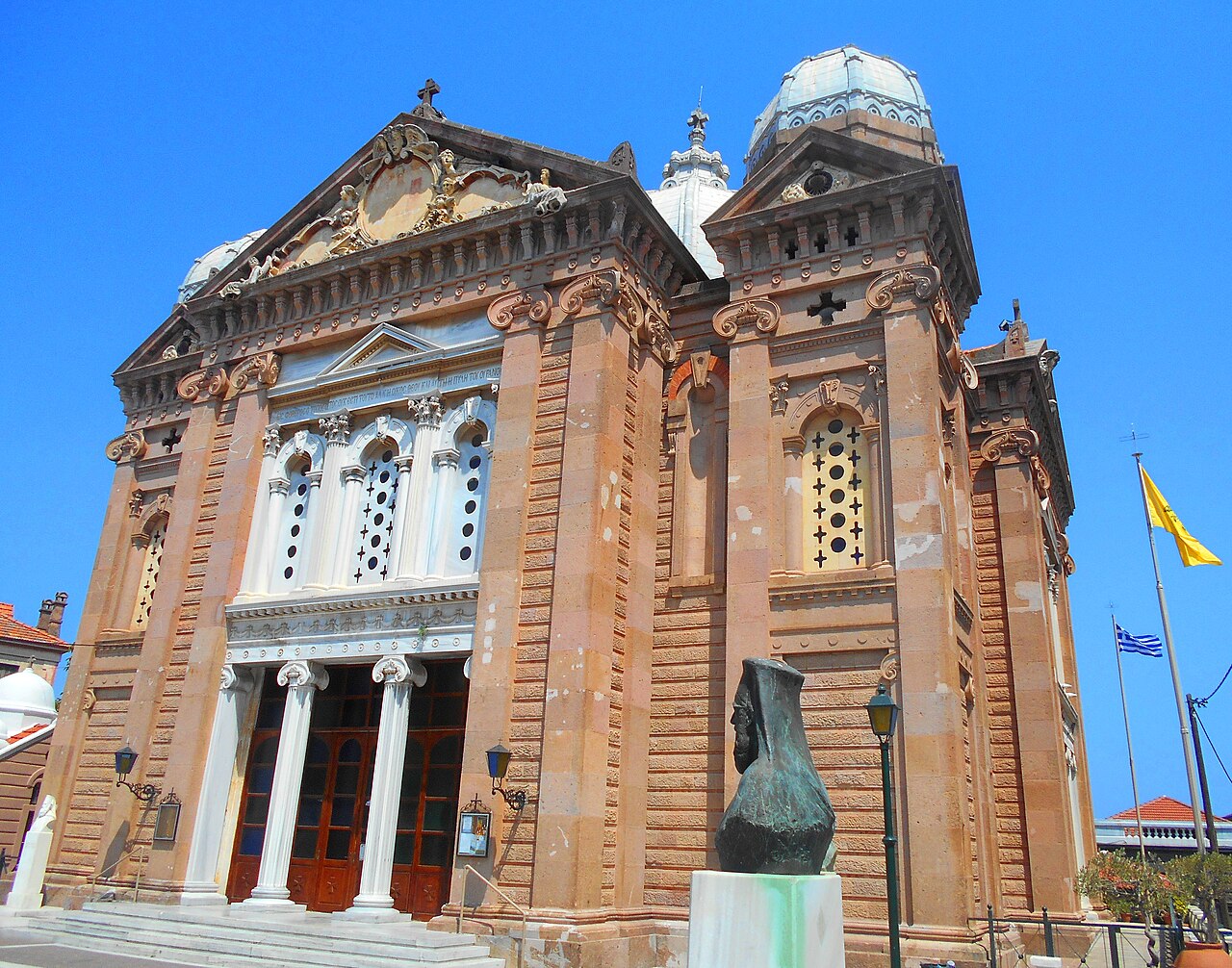
Church of Agios Therapon, Mytilene
The landmark church of the Mytilene waterfront, begun in 1850 to designs by the architect Argyris Adalis, built on a domed cross-in-circle plan with Gothic detailing on the exterior and five domes, the central one sheathed in tin. Its exterior ornamentation is by the artist Nikolaos Kessanlis and the interior woodwork by Dimitrios Kovalas; the Church History and Byzantine Museum stands on the square opposite.
Churches & monasteries · Skala Eressou (west Lesbos)
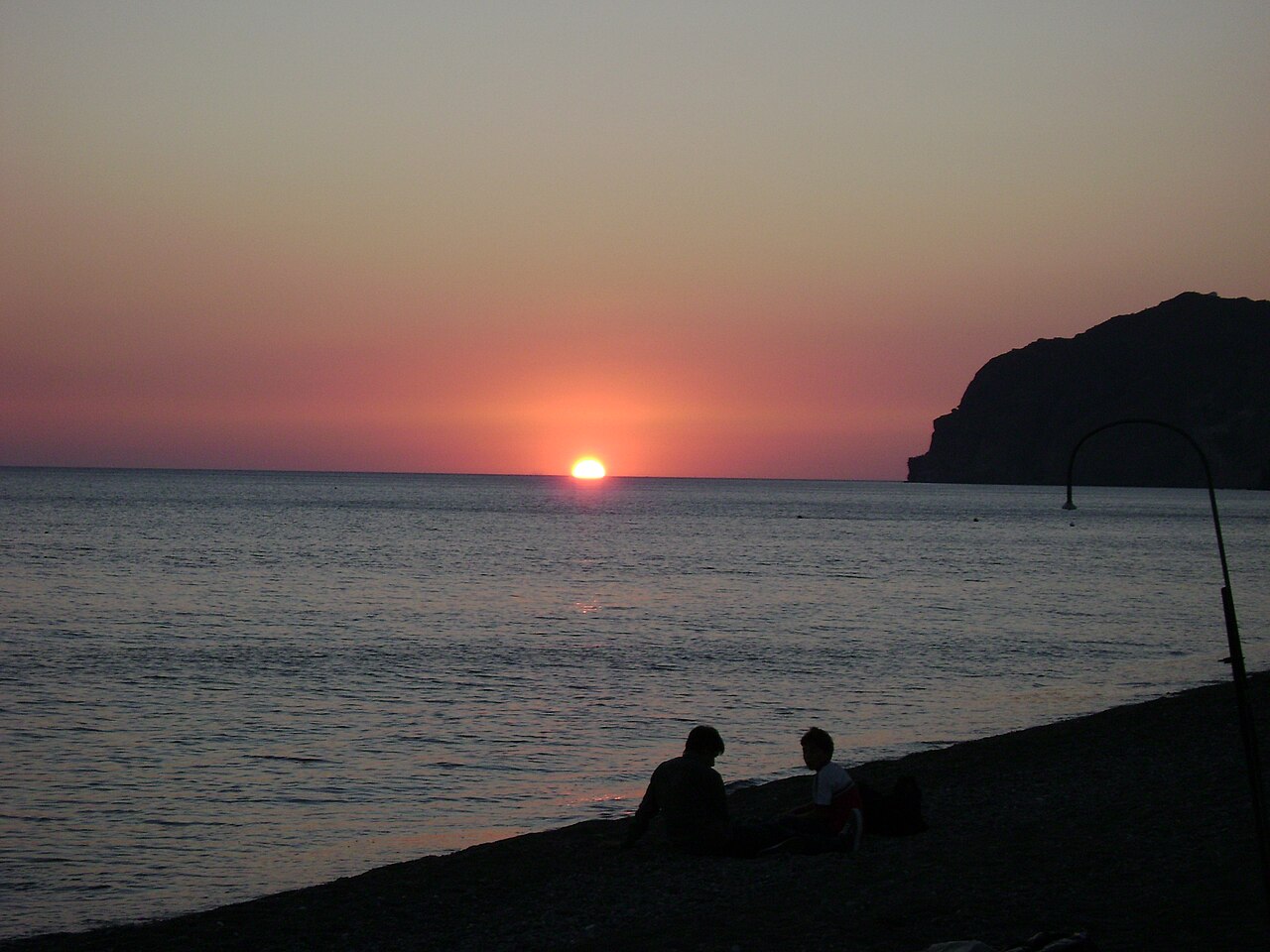
Early Christian Basilica of Agios Andreas, Skala Eressou
A three-aisled Early Christian basilica of about 450 AD in the south-eastern part of Skala Eressou, with a narthex, a nave paved with a mosaic showing peacocks, and an inscribed semicircular apse. The ruins were uncovered in 1884-85 by monks of the Pithari monastery, and the church is named after Archbishop Andrew of Crete, who fell ill on arriving from Constantinople and died at Eresos.
Churches & monasteries · Thermi (east Lesbos)
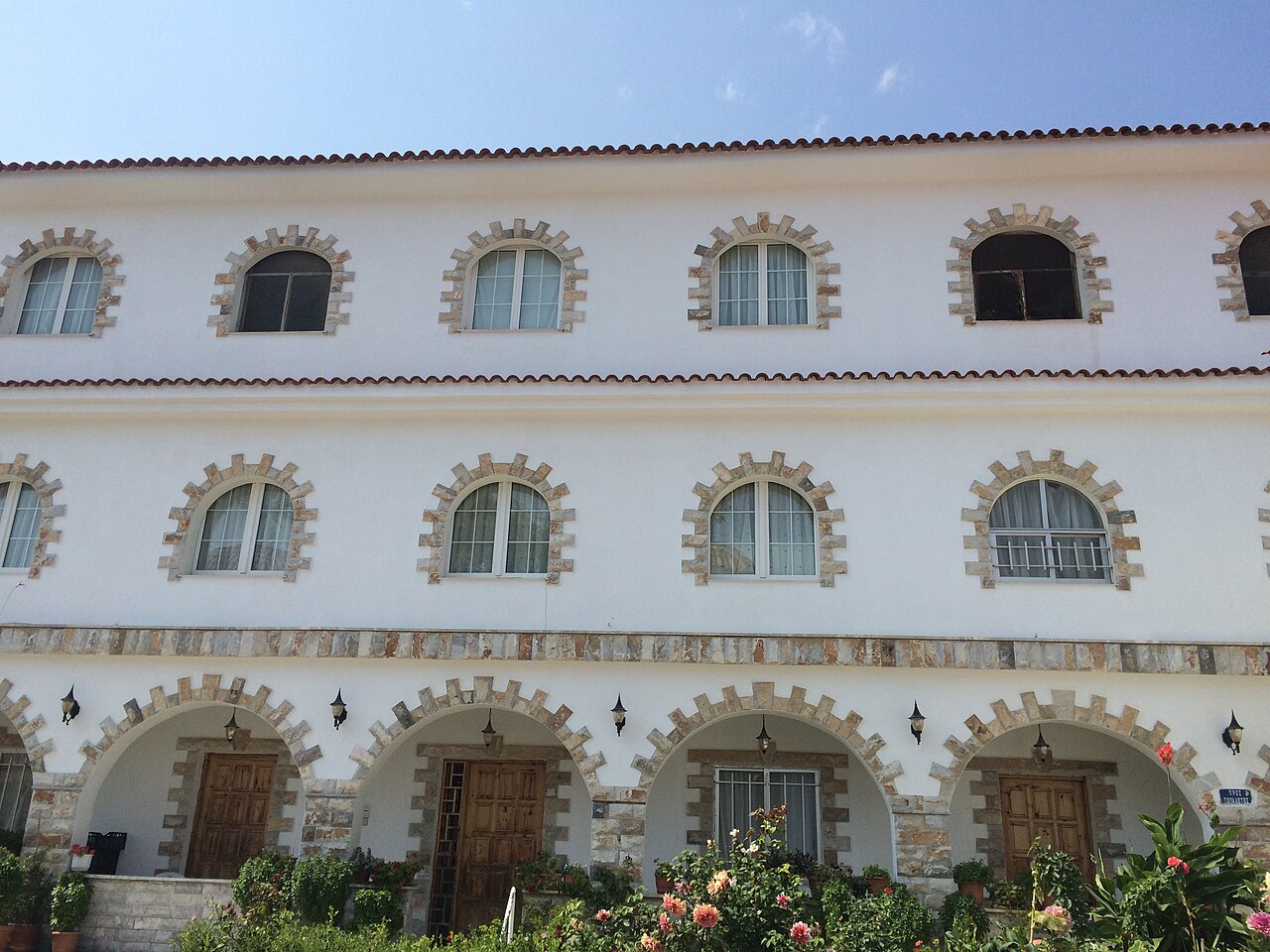
Monastery of Saints Raphael, Nikolaos and Irene
A convent about 3 km from Loutropoli Thermis, on the site of a 12th-century foundation destroyed by pirates in 1235 and converted into a male monastery in 1463 by Raphael and Nikolaos, who with the twelve-year-old Irene were killed during Ottoman rule. It was completely rebuilt in 1964 by Abbess Evgenia Kleidara and now holds the relics of the three neomartyrs; the feast on 9 April draws pilgrims from across the Orthodox world.
Churches & monasteries · Polichnitos (south Lesbos)
Monastery of the Dormition at Damandri
A small post-Byzantine monastery near Polichnitos, consisting of a single-space tile-roofed basilica with its service buildings. Its wall paintings date to the 16th century, with parts apparently repainted in 1733 by Michael Chomatzas of Chios, and the wooden iconostasis was assembled from components taken from neighbouring churches in the late Ottoman period.
Churches & monasteries · Kalloni
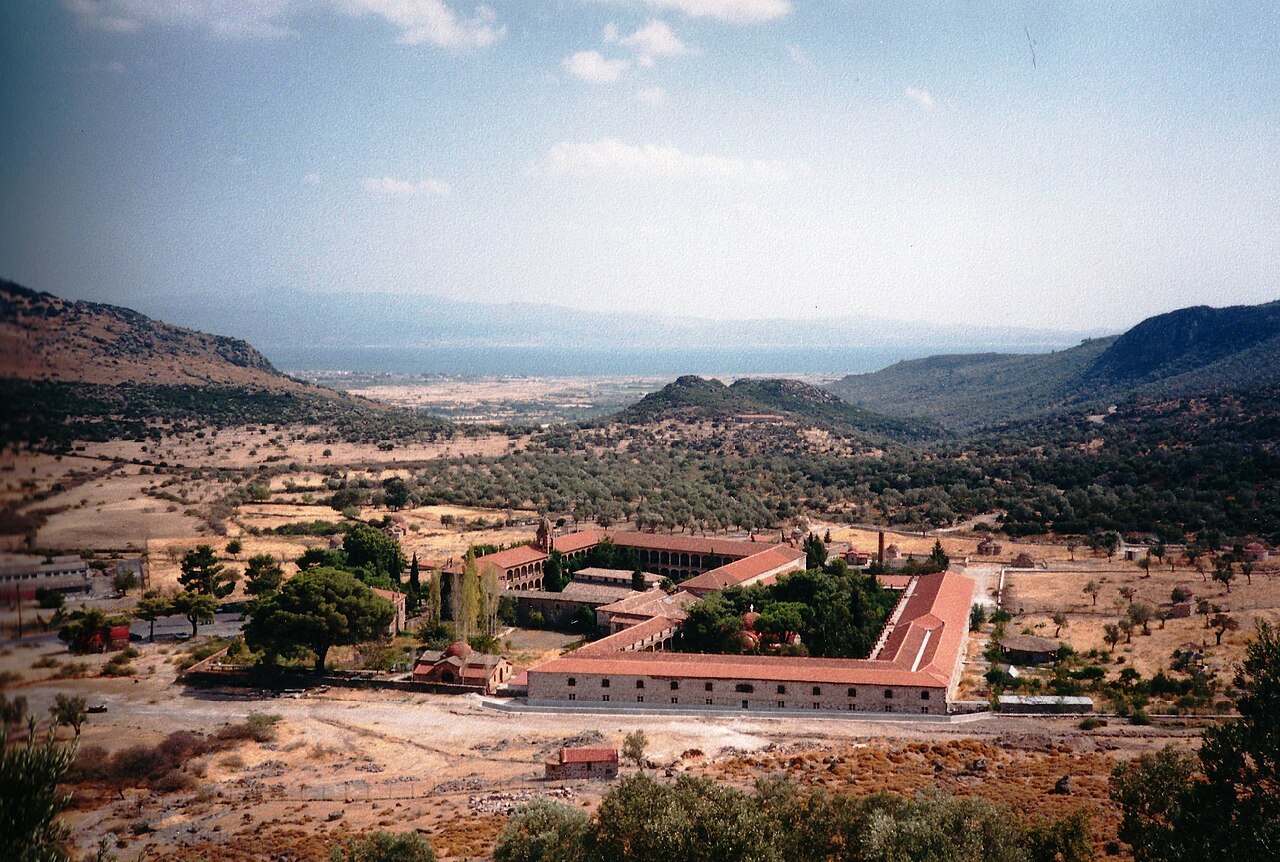
Monastery of Leimonos
A stauropegic male monastery founded in 1526 by Ignatios Agallianos, Bishop of Mithymna, who was later canonised, standing north-west of Kalloni. The complex has around 42 chapels, monks' cells and an oil press, a three-aisled catholicon of 1795 and 16th-century frescoes in the cemetery chapel, plus a library and church-history museum holding a 9th-century gospel book, patriarchal documents, Ottoman firmans, gold-embroidered vestments, icons and reliquaries. Access to the catholicon is restricted to men.
Churches & monasteries · Kalloni
Monastery of Panagia Myrsiniotissa
A convent in the hills near Kalloni, historically linked to the Leimonos monastery and to its founder Saint Ignatios Agallianos. Together with Leimonos and Perivolis it is one of the three monasteries of the Holy Metropolis of Mithymna.
Churches & monasteries · Antissa (west Lesbos)
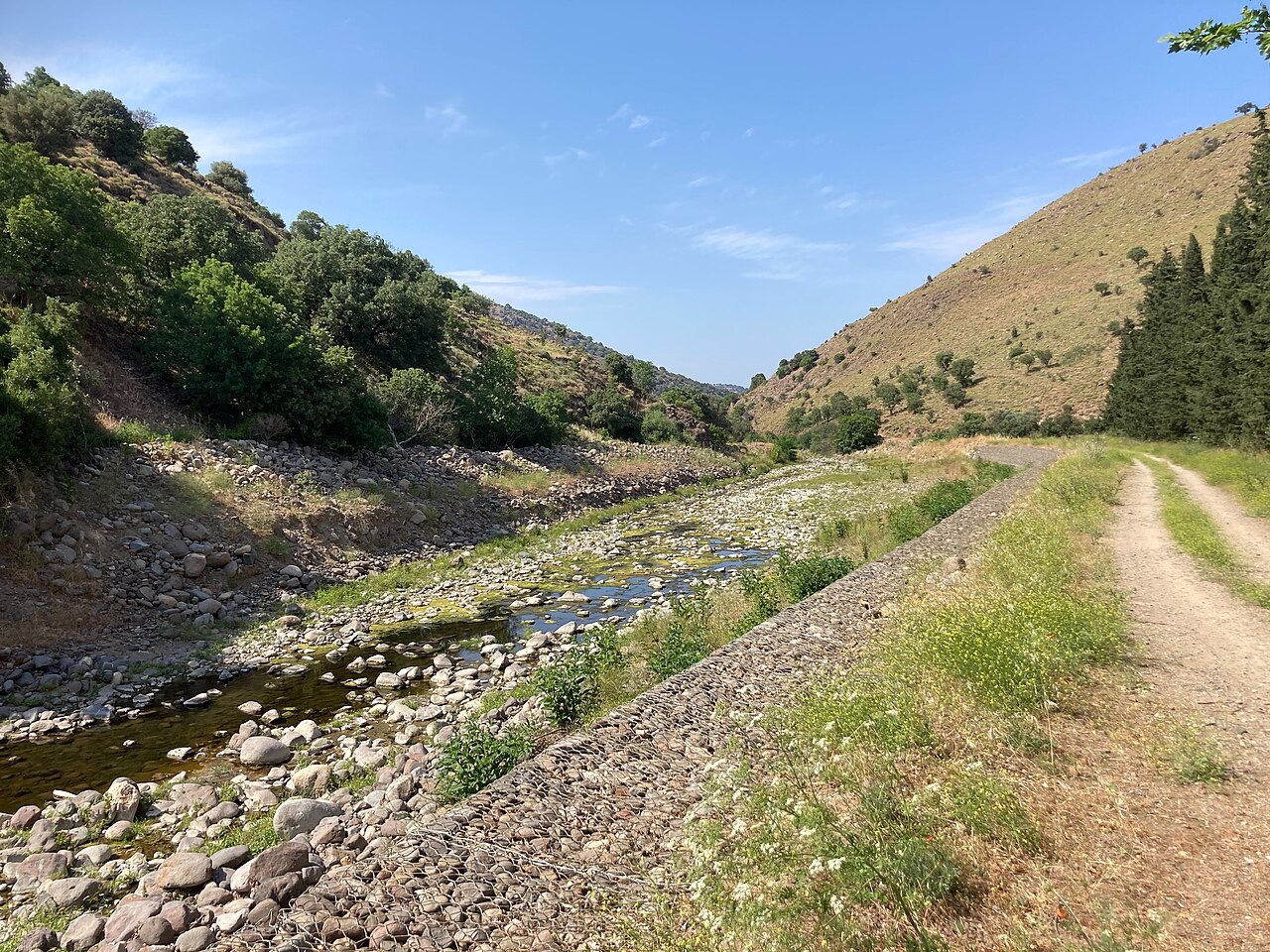
Monastery of Panagia Perivolis
A small convent dedicated to the Presentation of the Theotokos, standing in a green ravine cut by the Voulgaris river south-east of Antissa. The church measures 9.25 by 14.00 m and shows the features typical of early Ottoman-period churches on Lesbos, with low ceilings and narrow doorways, and its interior carries post-Byzantine wall paintings notable for their iconography.
Churches & monasteries · Eresos
Monastery of the Archangels at Pithari
A Byzantine foundation east of Eresos, named after a hollow in the ground shaped like a large clay jar (pithari), and recorded in Ottoman tax registers of 1548 and 1709. It served as an ecclesiastical place of correction for seven years before the Second World War and again until 1964; the catholicon, cells, courtyard and defensive tower have been restored and an artificial lake was created beside it in 2002.
Churches & monasteries · Mantamados (north-east Lesbos)
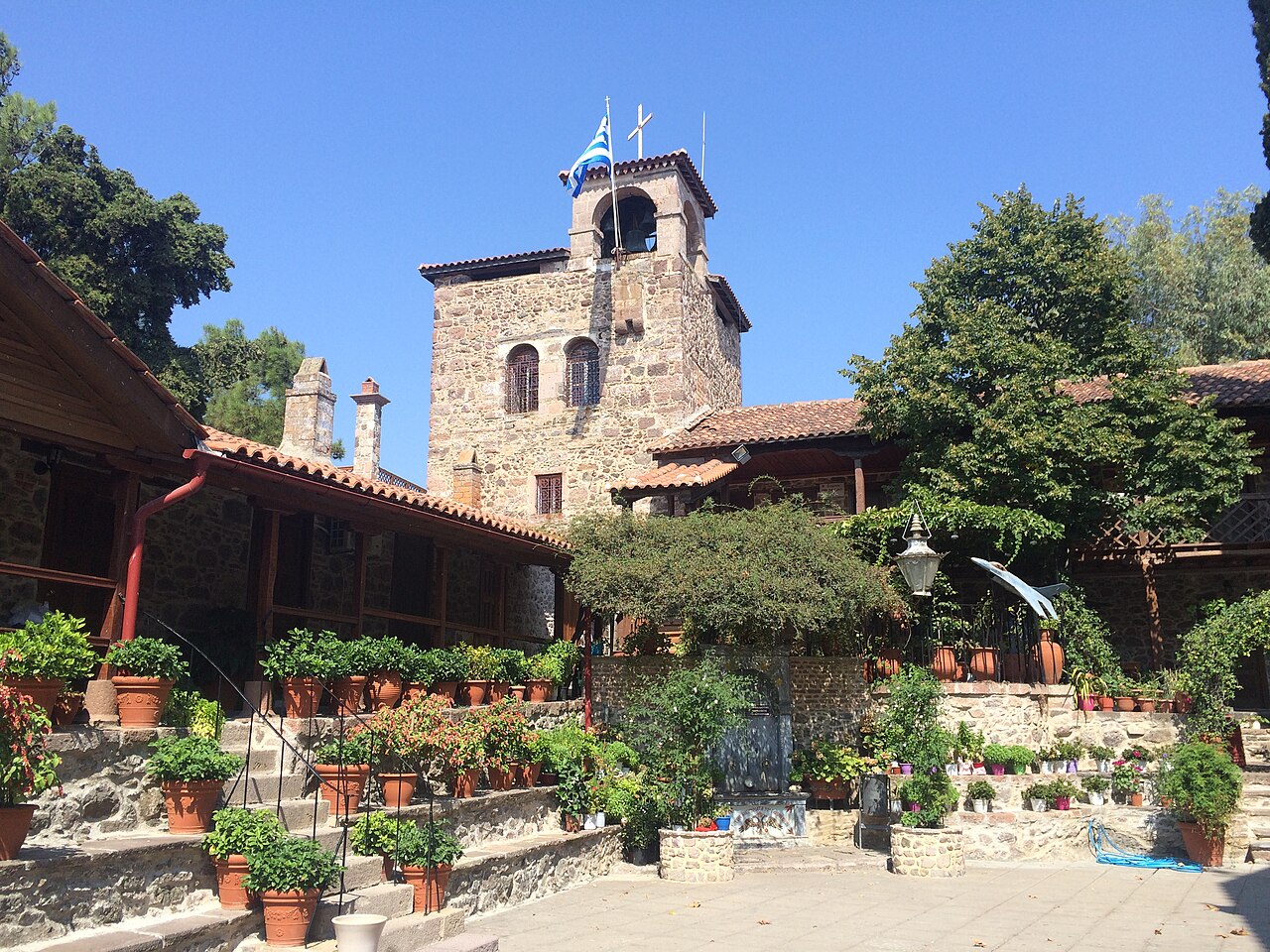
Monastery of the Archangels (Taxiarches) at Mantamados
The island's most visited pilgrimage site, holding one of the very few relief icons in the Orthodox tradition, which according to tradition was made by a surviving novice from wax mixed with the blood-soaked soil left after a Saracen raid. The monastery is documented in 1661; a 17th-century chapel was replaced by an 18th-century church and then by the present three-aisled basilica of 1879, and the main feast falls on the Sunday of the Myrrh-bearing Women.
Churches & monasteries · Mount Ordymnos, near Sigri (west Lesbos)
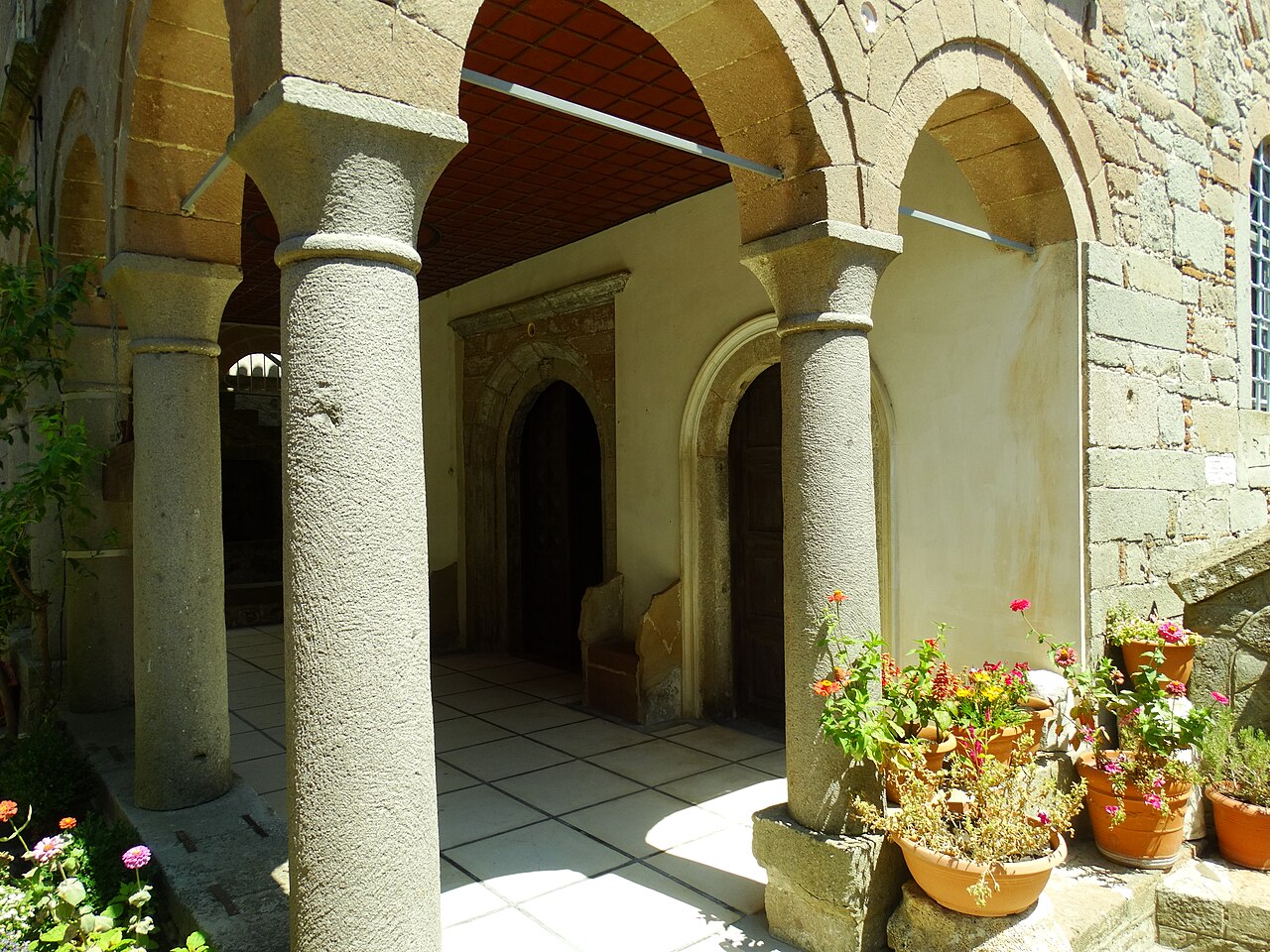
Monastery of Ypsilou (St John the Theologian)
A male monastery on the summit of Mount Ordymnos at 634 m, standing alone above the volcanic badlands between Antissa and Sigri and generally regarded as the oldest on Lesbos; tradition ascribes its foundation to before 800 AD and a patriarchal document of 1331 mentions it. The present catholicon was built in 1832; the monastery keeps a library of manuscript codices, patriarchal and metropolitan letters and printed books of 1535-1845, and a treasury museum of vestments, croziers, reliquaries and gilded gospel books. The gate closes at sunset.
Churches & monasteries · Agiasos (central-south Lesbos)
Church of the Dormition of the Theotokos, Agiasos
The pilgrimage church at the heart of Agiasos, built in 1815 after an earlier chapel was demolished in 1806 and its replacement burned in 1812. It is a hip-roofed three-aisled basilica with a narthex and a colonnade on all four sides, decorated inside by 1838, with a 19th-century marble iconostasis, three altar tables and portable icons of the 10th to 19th centuries. Its venerated icon of the Virgin, said to have been brought from Jerusalem by the monk Agathon and inscribed Meter Theou, Agia Sion, gave the village its name; the 15 August litany draws thousands.
Churches & monasteries · Petra (north Lesbos)
Church of Panagia Glykofilousa, Petra
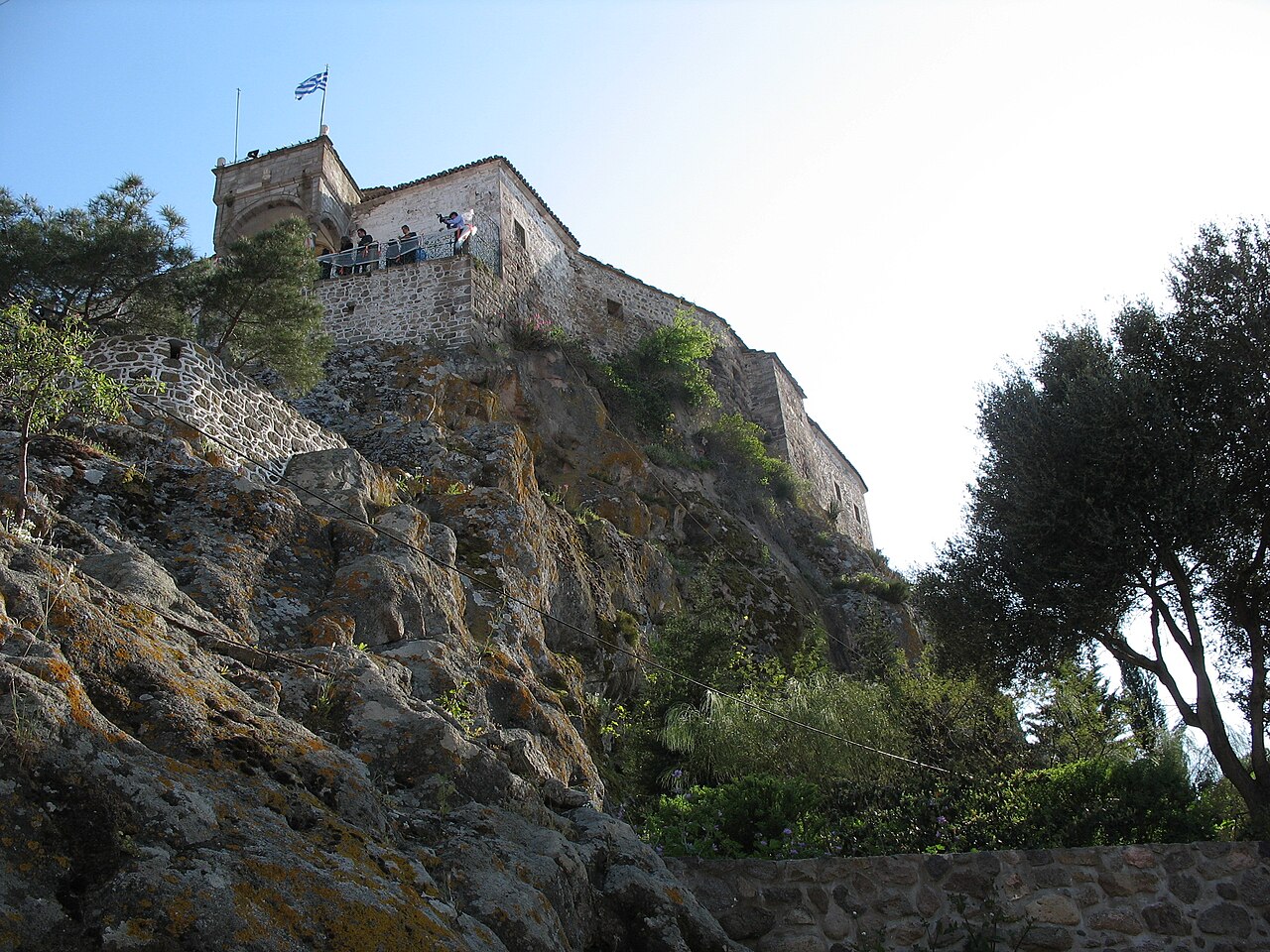
A three-aisled stone church that crowns the 40 m volcanic rock in the middle of Petra, reached by 114 steps cut into the rock and built so solidly that it resembles a small fort. A chapel probably stood here earlier; the larger church dates from the beginning of the 17th century and was repaired in 1840, and it holds Byzantine icons, a carved and painted iconostasis and a bishop's throne. The feast is on 15 August.
Churches & monasteries · Pyrgoi Thermis (east Lesbos)
Church of Panagia Trouloti, Pyrgoi Thermis
A rare surviving domed Byzantine church of the 14th or 15th century on a hill at Pyrgoi Thermis, built on a four-column cross-in-square plan with a cylindrical drum and later extended westwards. Its masonry incorporates reused marble blocks and ancient inscriptions, and it is unusual in showing the Virgin rather than Christ Pantocrator in the dome; murals of 1650 survive in part.